I have a confession.
I don’t like background music.
Actually, that’s not quite true.
I don’t like people treating music as background.
If you ever see me at an event with live musicians, I’ll probably be the one shushing the people who are talking. (By that point, my husband has perfected the art of looking completely unconnected to me.)
Who had the brilliant idea to treat musicians as though they are another table in the room? We spend years mastering our craft, often working one or two other jobs to support our mad decision to become musicians (my extra job was as a PA in a tequila company), and people carry on conversations as if nothing remarkable is happening a few feet away.
If it's live, why can't we simply listen?
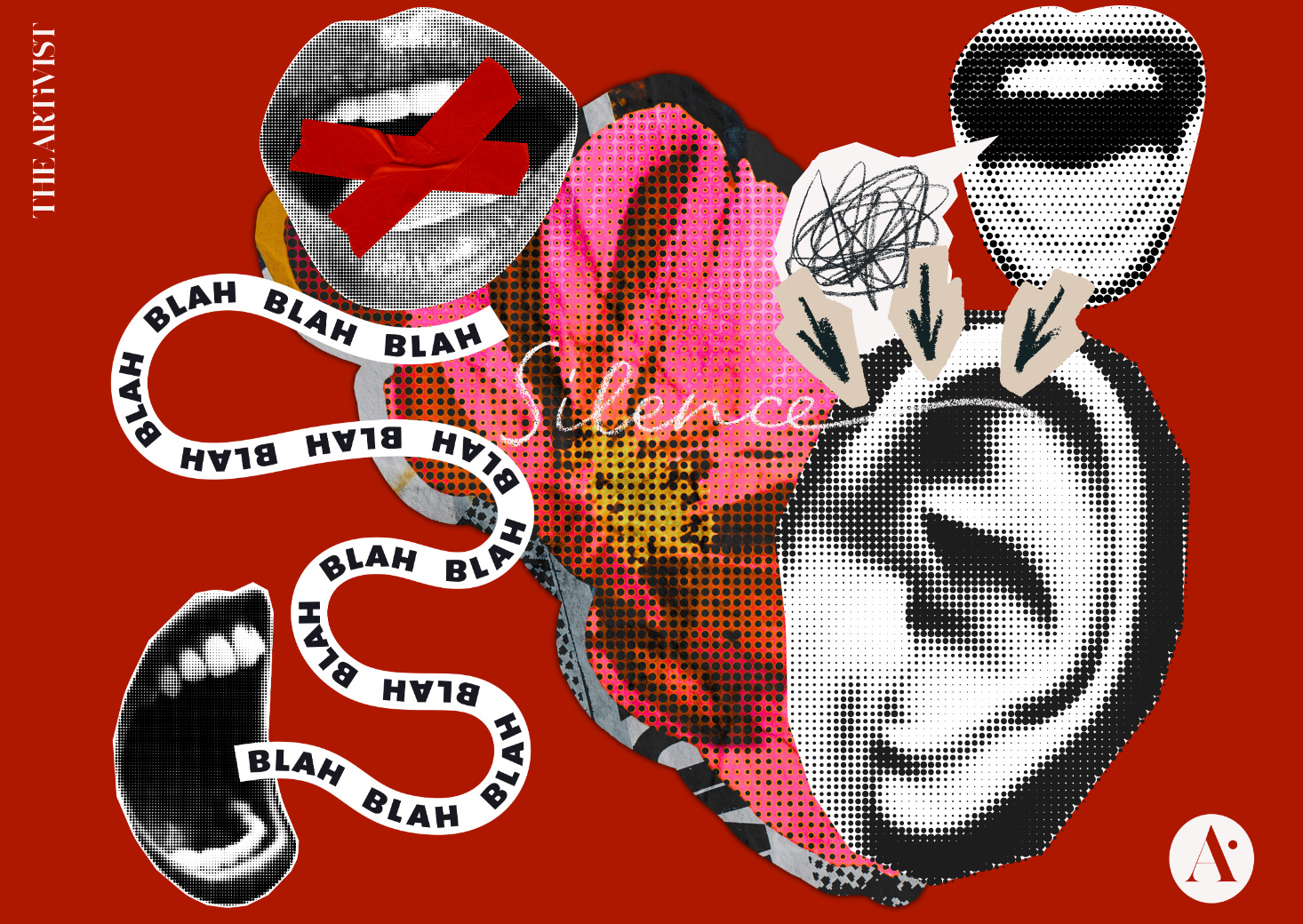
Perhaps I find it harder because music has never been background to me.
I kid you not: I can’t even listen to music while cleaning the house. More than once I’ve found myself standing in the middle of the kitchen, tea towel in one hand, completely motionless because something in the music simply wouldn’t let me carry on.
(My husband would probably point out that this explains rather a lot about the state of our kitchen. I hate it when he's right.)
I’ve spent most of my life on concert stages. (Yes, I'm counting the school concerts. I started singing when I was eight.) Every performance begins with a simple exchange. I offer my voice and, for a little while, a room full of strangers offers me something that has always fascinated me: their complete attention.
I don't think I'll ever stop finding that extraordinary.
People sometimes assume artists are driven by ego because we want to be on stage. (To be fair, that does happen.) But that's not what keeps most of us coming back.
Every audience is different. Every performance becomes a different conversation. And the best conversations don't end when you leave the room. They follow you home. You keep turning them over in your mind hours later, the way a wonderful film refuses to leave you after you've walked out of the cinema.
For years, I thought that was what I did for a living: sing.
Then, about eight years ago, a second-hand bookshop quietly rearranged my life. On an ordinary Sunday afternoon, I picked up an old encyclopaedia. Inside were thousands of names I’d never heard before.
Women.
Who wrote music.
For centuries.
(But that's a story for another day.)
So I did what any stubborn soprano would do. I collected evidence. Built databases. Published research. Gave talks. Tried to persuade people that history had made a terrible mistake.
Sometimes I’d play someone a piece.
“Who wrote this?”
“Emilie Mayer.”
“I’ve never heard of her.”
“Exactly.”
I spent years thinking the problem was that people didn’t know enough. So I gave them more information. (It seemed perfectly reasonable at the time.)
But every so often I’d watch an audience hear one of these pieces for the first time. At the moment they weren’t thinking about the statistics. (Well, at least I hope they weren't.) They weren’t wondering whether the composer had been treated fairly.
They were simply listening.
I remember thinking about that on the Tube home after a concert. (Yes, opera singers commute too.)
Somewhere between the concert hall and my front door, it occurred to me that I'd been trying to solve the wrong problem. People didn’t need convincing. They just needed the chance to listen.
I’ve seen complete strangers leave concerts quieter than when they arrived. Not every time, of course, but often enough to convince me that art can do something arguments rarely can.
So, the next time you find yourself somewhere with a live musician playing, resist the temptation to treat them as background.
Stop.
Listen.
Not just to the music, but to what happens inside you when you give something your complete attention.
Because before we can change the world, we must create space for the world to change us.
Perhaps that’s where change begins.
Not on a stage. Not in an argument.
But in the quiet moment when we finally stop and listen.